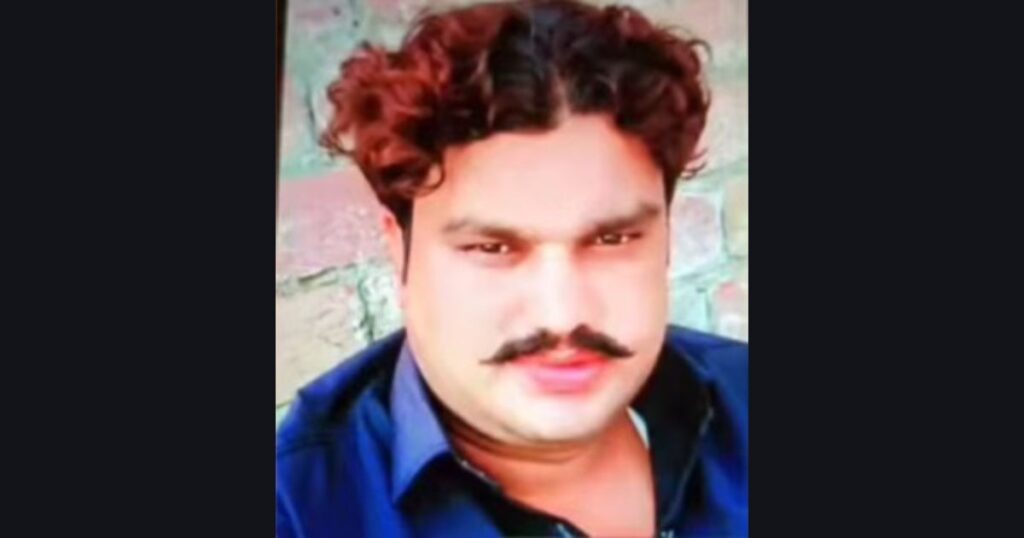
The family of Daniyal Darshan has been living with fear, uncertainty and unanswered questions since the Christian livestock trader disappeared under suspicious circumstances in Sialkot District.
According to his relatives, Daniyal has not been seen since leaving his home to purchase livestock from a local market. His family later received reports that he had converted to Islam and was now known as Muhammad Danish, but they have been unable to confirm whether he is safe, where he is living or whether any reported conversion took place voluntarily.
On 10 July 2026, a fact-finding team from The EDGE Foundation visited Village Mokhal in Tehsil Daska, District Sialkot, to document the circumstances surrounding Daniyal’s disappearance and assess the security situation facing his family.
The team consisted of Azhar Saeed, Chairman of The EDGE Foundation, and Irfan Peter, Senior Manager.
From the moment they entered the village, the team observed what appeared to be an atmosphere of caution and unease.
Local residents directed them to the home of Rafiq Masih, a close relative of Daniyal. However, when the team arrived, several people quickly gathered outside the house, making it difficult to discuss the case openly.
Concerned about the family’s safety and the sensitive nature of the visit, Rafiq invited the team to a nearby medical clinic operated by Dr Rafaqat, Daniyal’s paternal cousin.
The clinic was busy with patients, many from the surrounding Muslim community. After attending to several of them, Dr Rafaqat requested that the remaining patients return later so the family could speak privately with the visiting team.
During the confidential meeting, relatives described Daniyal as the sole breadwinner for his parents and younger siblings.
He earned his living as a livestock trader, buying buffaloes, cows and other animals from markets and local sellers before reselling them for profit.
According to the family, on the day of his disappearance Daniyal left home carrying approximately PKR 1.2 million in cash. He told his relatives that he was travelling to a livestock market to purchase animals.
However, after he failed to return, the family made inquiries and reportedly learned that he had never arrived at the market.
Since then, they say they have received no reliable information about his whereabouts.
The family does not know whether Daniyal is alive, where he may be living, whether he is being held against his will, or whether the reported conversion to Islam occurred voluntarily or under pressure.
They say they later heard that Daniyal had been renamed Muhammad Danish, but they have not been able to speak with him directly or independently verify the circumstances surrounding the reported religious conversion.
The family also told the fact-finding team that Daniyal’s disappearance was not the first incident of its kind involving members of their extended family.
According to their testimony, another cousin, Shaan Masih, disappeared approximately ten years ago under similar circumstances and was allegedly subjected to forced religious conversion. The family says they have received no confirmed information about his whereabouts or well-being since then.
Another cousin, Sikhawat Masih, reportedly faced threats and intimidation before leaving Pakistan. He has been living in Thailand for around twelve years, but according to the family, threats against him have continued even while he has remained abroad.
The relatives further alleged that Sikhawat’s young son was physically attacked while travelling to college without apparent provocation. They believe the assault was linked to the wider intimidation faced by the family.
Daniyal’s relatives fear that the same pattern may now be repeating.
They allege that they have received threats warning them not to search for him or pursue legal action. According to the family, they were told that continued efforts to locate Daniyal could place other relatives in danger.
As a result, Daniyal’s parents, siblings and other close family members are reportedly no longer living permanently in their own home. Instead, they have been moving between different locations in an effort to remain safe.
The disappearance has caused severe emotional distress throughout the family.
Their situation is made more difficult by the fact that they are reportedly the only Christian household in a village of more than 150 homes.
Although relocation might appear to offer greater safety, the family says leaving permanently would mean abandoning everything they have built over generations.
Their ancestral home is located in the village, Dr Rafaqat’s clinic provides an important source of income, and the family owns approximately twelve acres of agricultural land. Moving away would therefore mean losing both their property and their livelihood.
The family also told the visiting team that three members of their extended family are currently serving in the Pakistan Army. Despite this, they say they have been unable to obtain effective protection or meaningful assistance in resolving Daniyal’s disappearance.
During the visit, representatives of The EDGE Foundation observed that discussions concerning Daniyal could not initially take place openly because of concerns about surveillance, local hostility and possible reprisals.
The family’s account remained consistent regarding the circumstances of Daniyal’s disappearance, the reported history of similar incidents and the threats they continue to face.
The EDGE Foundation has called for an independent and impartial investigation to determine Daniyal’s whereabouts and establish whether he is safe.
The Foundation has also urged the authorities to ensure that any statement concerning his religious conversion is made freely, independently and without coercion.
It has further requested immediate protection for Daniyal’s relatives and a broader investigation into the family’s allegations concerning previous disappearances, threats and violence.
For Daniyal’s family, the priority remains finding him and hearing directly from him in a safe and independent environment.
Until that happens, they remain trapped between the fear of further retaliation and the determination to discover what happened to the son and brother on whom they depended.
The case raises serious concerns about freedom of religion, personal liberty, minority protection and the responsibility of the authorities to investigate suspicious disappearances without discrimination. It also demonstrates the devastating effect such cases can have on entire families, particularly when threats force them from their homes and prevent them from safely pursuing justice.