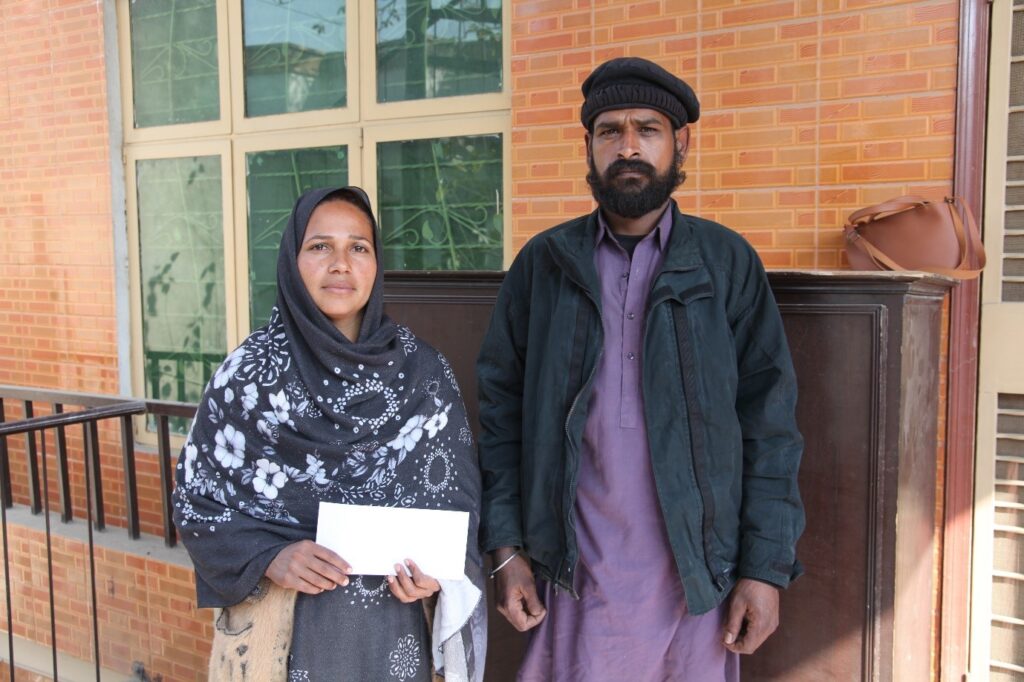
Imran Masih, a 33-year-old Christian brick kiln worker from Jaranwala, had spent most of his adult life doing physically demanding labour to provide for his family. Together with his wife, Gulnaz, and their five children—including their ten-year-old son, Rizwan, who is deaf and mute—the family struggled to survive on low wages while facing the hardships experienced by many brick kiln workers across Pakistan.
In 2025, Imran and his family began working at a brick kiln near Mirza Virk village in Sheikhupura District. At the start of their employment, they received an advance payment of PKR 150,000 and were paid PKR 1,550 for every 1,000 bricks they produced.
According to Imran, frequent deductions from their wages, combined with illness and the cost of supporting a family of seven, made it almost impossible to reduce the outstanding advance or meet their basic needs.
Unable to continue under these conditions, the family left the brick kiln in November 2025 and returned to their modest home in Shah Kot—a house that had been gifted to Imran by his late father. They hoped to begin rebuilding their lives away from debt and uncertainty.
Those hopes were short-lived.
According to Imran and his family, on 7 January 2026, one of the kiln owners, Shahzad, located him and demanded that he record a video statement claiming he had received PKR 350,000 as an advance from the kiln owners.
Imran says he initially refused, insisting that he had received only PKR 150,000. However, he alleges that he was threatened with the loss of his family home and told he would be forced back to the brick kiln if he did not comply.
Fearing the consequences, Imran recorded the statement.
According to his account, he was then taken back to the brick kiln against his will and compelled to continue working there. He alleges that he was prevented from contacting his wife or children and remained effectively cut off from his family for approximately fifteen days.
During that period, despite carrying out physically demanding work, Imran says he received only PKR 4,000 in wages.
As days passed without hearing from her husband, Gulnaz became increasingly concerned for his safety. Desperate to secure his release, she approached The EDGE Foundation for help.
After documenting the family’s allegations, the Foundation arranged legal representation and referred the matter to Advocate Sohail Shahid Gill.
Recognising the urgency of the situation, the Foundation filed a Habeas Corpus Petition before the Lahore High Court on 19 January 2026, requesting that Imran be recovered and produced before the Court.
Following the Court’s intervention, law enforcement authorities recovered Imran from the brick kiln and presented him before the Lahore High Court on 22 January 2026.
After hearing the case, the Court ordered Imran’s release, restoring his freedom and allowing him to return home to his wife and five children.
The reunion marked the end of weeks of uncertainty for the family, who had feared they might never see him again.
Following his release, Imran thanked The EDGE Foundation for the legal assistance it had provided. He said he had spent more than two decades working in Pakistan’s brick kiln industry but had never before received legal support to protect his rights.
His case highlights the vulnerability of many brick kiln workers who remain dependent on advance payment systems that can leave families trapped in cycles of debt and exploitation. Human rights organisations have long raised concerns that financial dependence, combined with limited legal awareness and poverty, can place workers at risk of abuse and restrict their freedom to leave their employment.
Imran’s case also demonstrates the importance of timely judicial intervention. The successful Habeas Corpus petition enabled the Court to examine the allegations and ensure that he was safely recovered and reunited with his family.
Today, Imran and his family are rebuilding their lives after his release. While the financial challenges remain significant, his case stands as an example of how access to legal aid and judicial oversight can help protect vulnerable workers and uphold their fundamental rights.