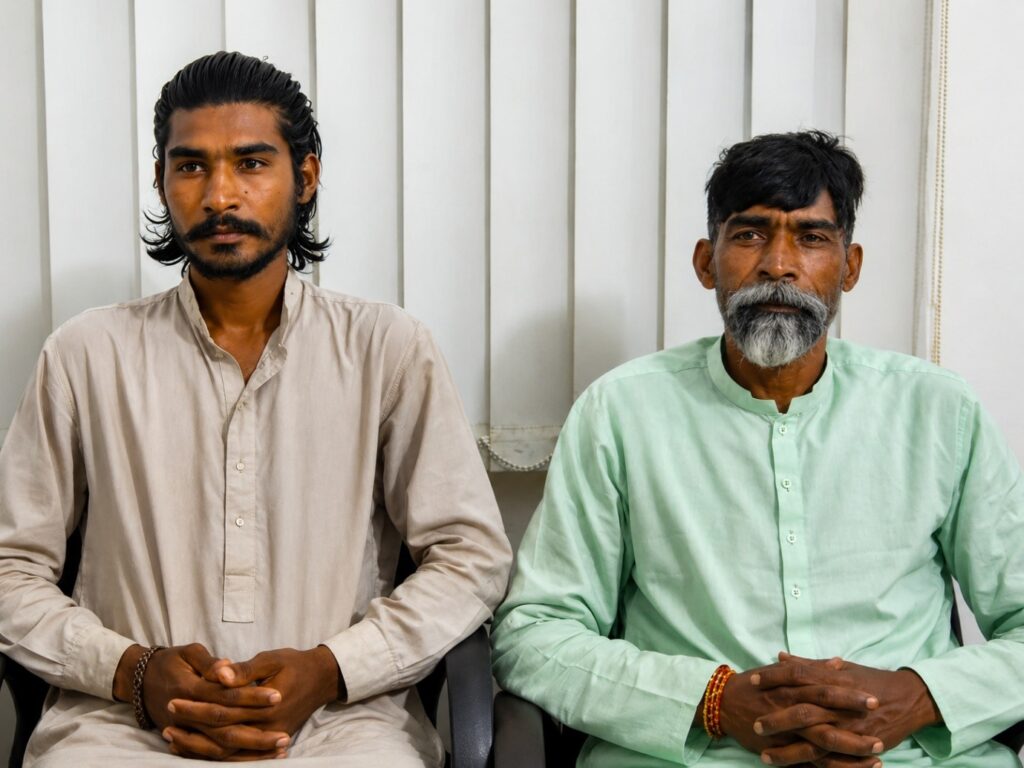
Adil Ashraf, a Christian brick kiln worker and father of two young children, was reunited with his family after the Lahore High Court ordered his recovery from a brick kiln where he was allegedly being held against his will.
His case highlights the vulnerability of many impoverished labourers who remain dependent on brick kiln owners and often lack the financial means to seek legal protection when disputes arise.
Adil’s father, Ashraf Meraj, is a daily-wage labourer and the father of ten children. Supporting such a large family had always been a struggle, but his greatest ordeal began when Adil disappeared.
According to Ashraf, his son had been confined at a brick kiln near Raiwind, Lahore, owned by Khalid Gujjar since November 2025.
The family maintains that Adil had never borrowed money from the kiln owners. Despite this, they allege that he was falsely accused of owing a debt and was prevented from leaving the premises.
Ashraf further alleged that those holding his son demanded PKR 350,000 in exchange for his release—an amount far beyond anything the family could afford.
Whenever he pleaded for mercy, Ashraf says he was threatened and warned that seeking legal help would only make matters worse for his son.
While allegedly being held at the brick kiln, Adil was separated from his wife, his young daughter and his newborn son.
His family also feared for his health.
According to relatives, Adil suffers from serious medical problems and has only one functioning kidney. They believe his condition deteriorated during his alleged confinement, increasing their fears that he might not survive if he remained at the kiln.
With no other options available, Ashraf approached The EDGE Foundation seeking urgent legal assistance.
After reviewing the family’s allegations, the Foundation documented the case and arranged legal representation through Advocate Sohail Shahid Gill.
On 24 March 2026, a Habeas Corpus Petition was filed before the Lahore High Court on Ashraf’s behalf, requesting that Adil be recovered and produced before the Court.
The matter came before Justice Muhammad Jawad Zafar on 30 March 2026.
After considering the petition, the Court issued notice to the Station House Officer (SHO) of Raiwind Police Station and directed the police to recover Adil and present him before the Court on 6 April 2026.
Acting on those directions, police recovered Adil from the brick kiln and produced him before the Lahore High Court on the scheduled date.
After hearing the matter, the Court ordered that Adil be released immediately, restoring his liberty and bringing the legal proceedings to a successful conclusion.
For Adil’s family, the Court’s decision ended months of fear, uncertainty and helplessness.
His release allowed him to return home and embrace his wife and two young children after a prolonged separation. It was also a moment of immense relief for his father, who had spent months searching for help while fearing for his son’s safety and deteriorating health.
Adil’s case illustrates the challenges faced by many brick kiln workers whose poverty and dependence on employers leave them vulnerable to allegations of unlawful confinement and labour exploitation.
Human rights organisations have long argued that access to free legal representation is essential for workers who would otherwise be unable to challenge abuse or seek protection through the courts.
The case also demonstrates the important role of judicial oversight. The Habeas Corpus proceedings enabled the Court to intervene quickly, ensure Adil’s recovery and restore his freedom.
Today, Adil is back with his family and beginning to rebuild his life after months of separation. While the experience has left lasting emotional and financial challenges, his case stands as a reminder that timely legal intervention can provide hope and justice to some of Pakistan’s most vulnerable workers.